Angel Hair Pasta With Alfredo Sauce
Highlighted under: Home Inspiration
Angel Hair Pasta With Alfredo Sauce
Angel Hair Pasta With Alfredo Sauce
Angel Hair Pasta With Alfredo Sauce
Mastering the Alfredo Sauce
The key to a rich and creamy Alfredo sauce lies in the balance of ingredients. Use high-quality butter and freshly grated Parmesan cheese for the best flavor. As the butter melts over medium heat, add the heavy cream gradually, stirring constantly to create an emulsion. This process should take about 5 minutes, allowing the sauce to thicken slightly before adding the cheese. By keeping the heat at medium, you avoid curdling the cream, ensuring a silky texture.
Avoid pre-grated cheese, as it is often coated with anti-caking agents that prevent it from melting smoothly into the sauce. I recommend grating your Parmesan just before using it; the fresh flavor and texture make a noticeable difference. When incorporating the cheese, stir until it is completely melted and the sauce is glossy, which should take about 2 to 3 minutes. If the sauce becomes too thick, a splash of pasta water can loosen it up nicely.
Cooking the Angel Hair Pasta
Angel hair pasta cooks quickly, usually in about 3 to 4 minutes. Be sure to use a large pot of boiling salted water to prevent the strands from clumping together. As it cooks, give it a stir occasionally for even cooking. Check for doneness a minute or so before the package instructions, aiming for al dente. Overcooked angel hair can become mushy, so timing is essential; it should be tender yet firm to the bite.
When draining the pasta, reserve a cup of the cooking water. This starchy water is a fantastic addition to your sauce, helping it adhere to the pasta and enhancing the overall flavor. After draining, immediately toss the hot pasta into the Alfredo sauce; this allows the pasta to absorb some of that rich goodness. A quick stir ensures every strand is coated, providing maximum flavor in each bite.
Serving Suggestions and Storage
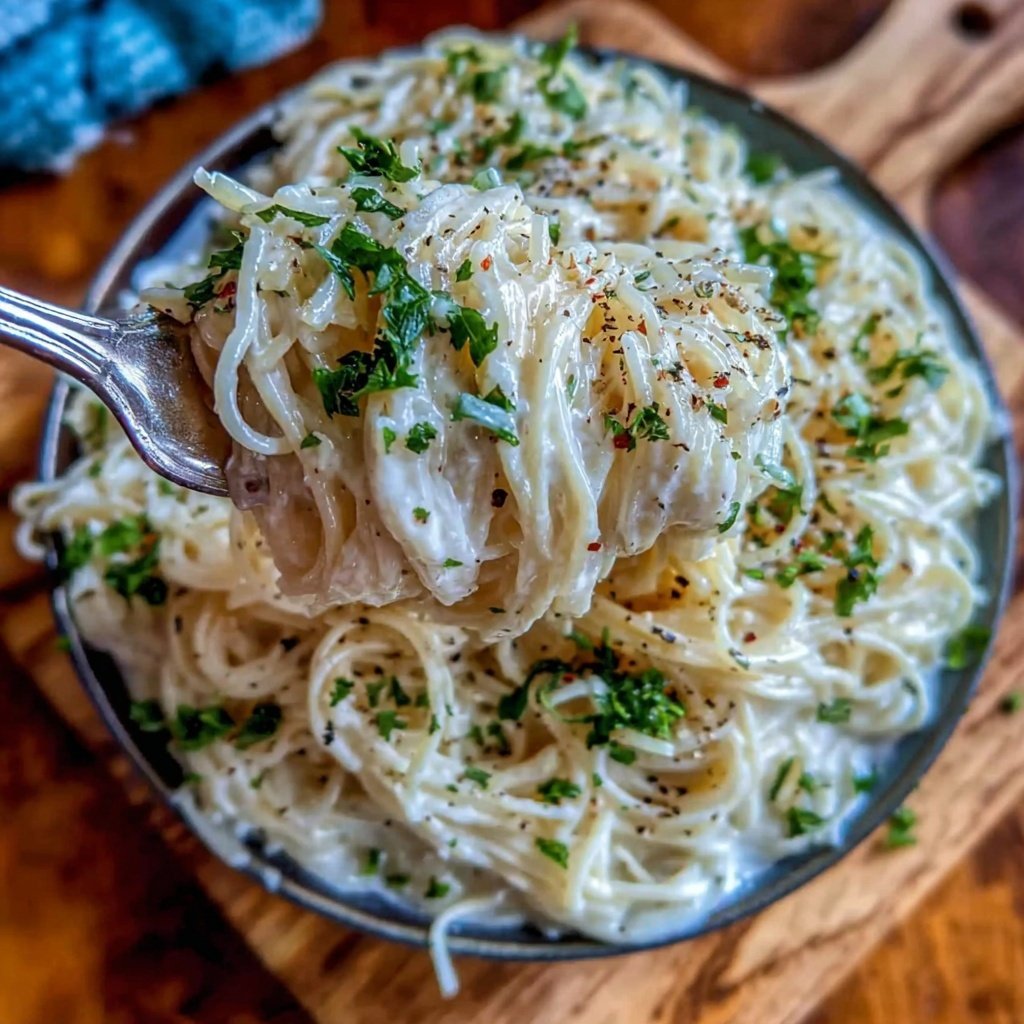
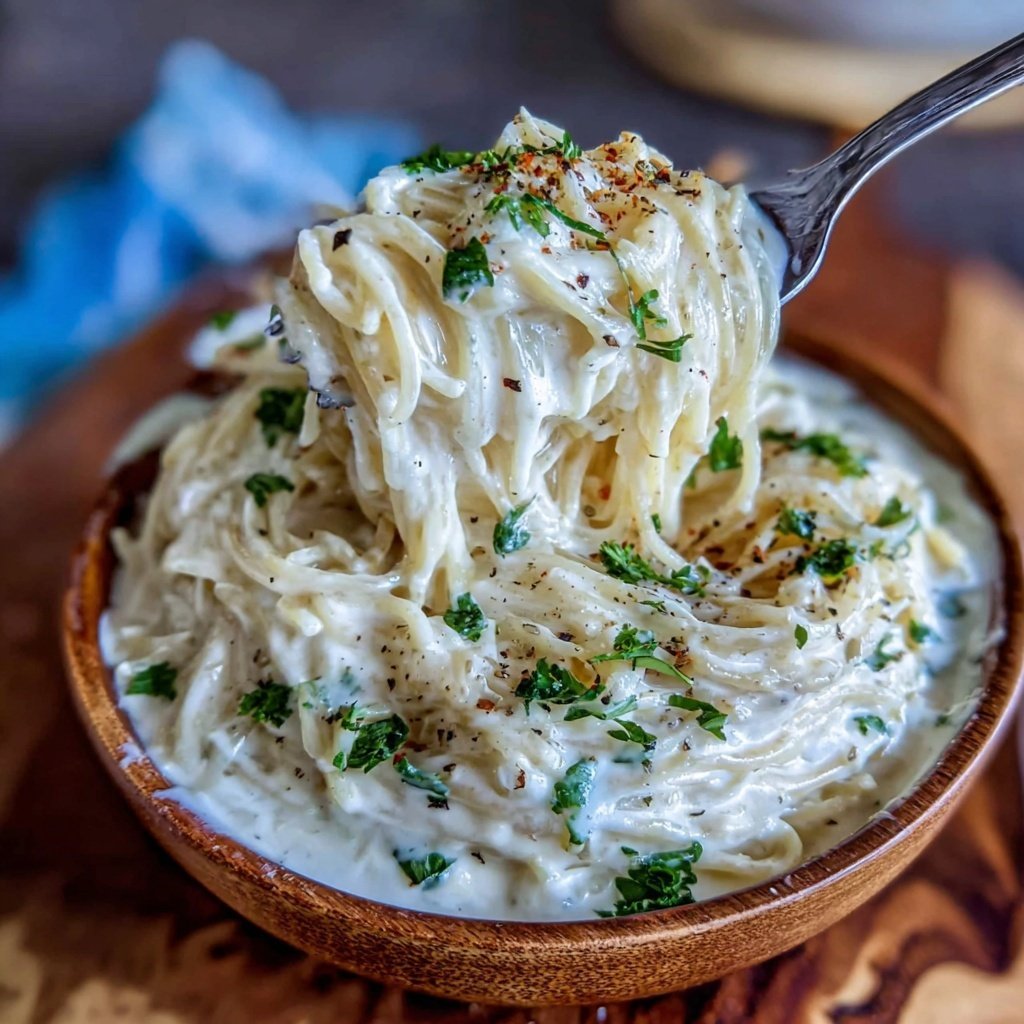
To elevate your Angel Hair Pasta with Alfredo Sauce, consider garnishing it with fresh parsley or basil for a pop of color and freshness. A sprinkle of cracked black pepper or a dash of nutmeg can add depth to the dish, enhancing its creamy character. Serve it immediately for the best taste, alongside simply roasted vegetables or a crisp salad to balance the richness of the Alfredo sauce.
If you have leftovers, store them in an airtight container in the refrigerator for up to 3 days. Reheat gently on the stove over low heat, adding a splash of cream or pasta water to restore its creamy consistency. While I generally don’t recommend freezing Alfredo pasta due to its creamy nature, if you do choose to freeze it, aim to undercook the pasta slightly before freezing to maintain texture during reheating.
Ingredient Substitutions
If you're looking for a lighter version of the Alfredo sauce, consider substituting half of the heavy cream with low-fat milk or a plant-based milk. Keep in mind that the texture will be different; the sauce may not be as thick, so adjusting the cooking time might be necessary. Additionally, using a reduced-fat cheese can also help create a lighter version without sacrificing too much flavor.
Vegetarian alternatives for the Parmesan include nutritional yeast or a dairy-free Parmesan substitute, which will impart a cheesy flavor while keeping the recipe plant-based. However, remember that the final taste will slightly vary. Always taste and adjust seasonings accordingly to maintain deliciousness.
Common Troubleshooting
One frequent issue with Alfredo sauce is separation, which can happen if the heat is too high when adding the cheese. Make sure to keep the sauce on medium-low heat once the cheese is added and stir continuously to help it blend smoothly. If it does split, whisk in a little extra cream or pasta water over low heat until it comes back together.
Another common problem is getting the sauce to the desired consistency. If your sauce is too thick, gradually add reserved pasta water or cream until it reaches the perfect silkiness. Conversely, if it’s too thin, letting it simmer for a few extra minutes will help thicken it up as the cream reduces.
Scaling Up the Recipe
If you plan to serve a crowd, doubling the recipe is straightforward. Ensure you have a large enough pot to accommodate the pasta without overcrowding it. If increasing the sauce, consider using a wide, shallow pan for even heat distribution, allowing the sauce to reduce properly for a richer flavor. Note that a slight adjustment in cooking times may be necessary as larger batches can take longer to heat through.
When scaling this recipe, be cautious about seasoning. Start with half the recommended salt and keep tasting as you go, adjusting to your preference. Also, make sure to keep an eye on the sauce as it cooks; larger volumes may require more attention to avoid sticking or burning.